Marketplace growth is a two-sided challenge. A platform can attract customers, but long-term growth also depends on continuously expanding the merchant network that gives those customers more products, categories, price points, and choices. For large e-commerce platforms, seller acquisition therefore becomes a commercial execution function — not simply a recruitment exercise.
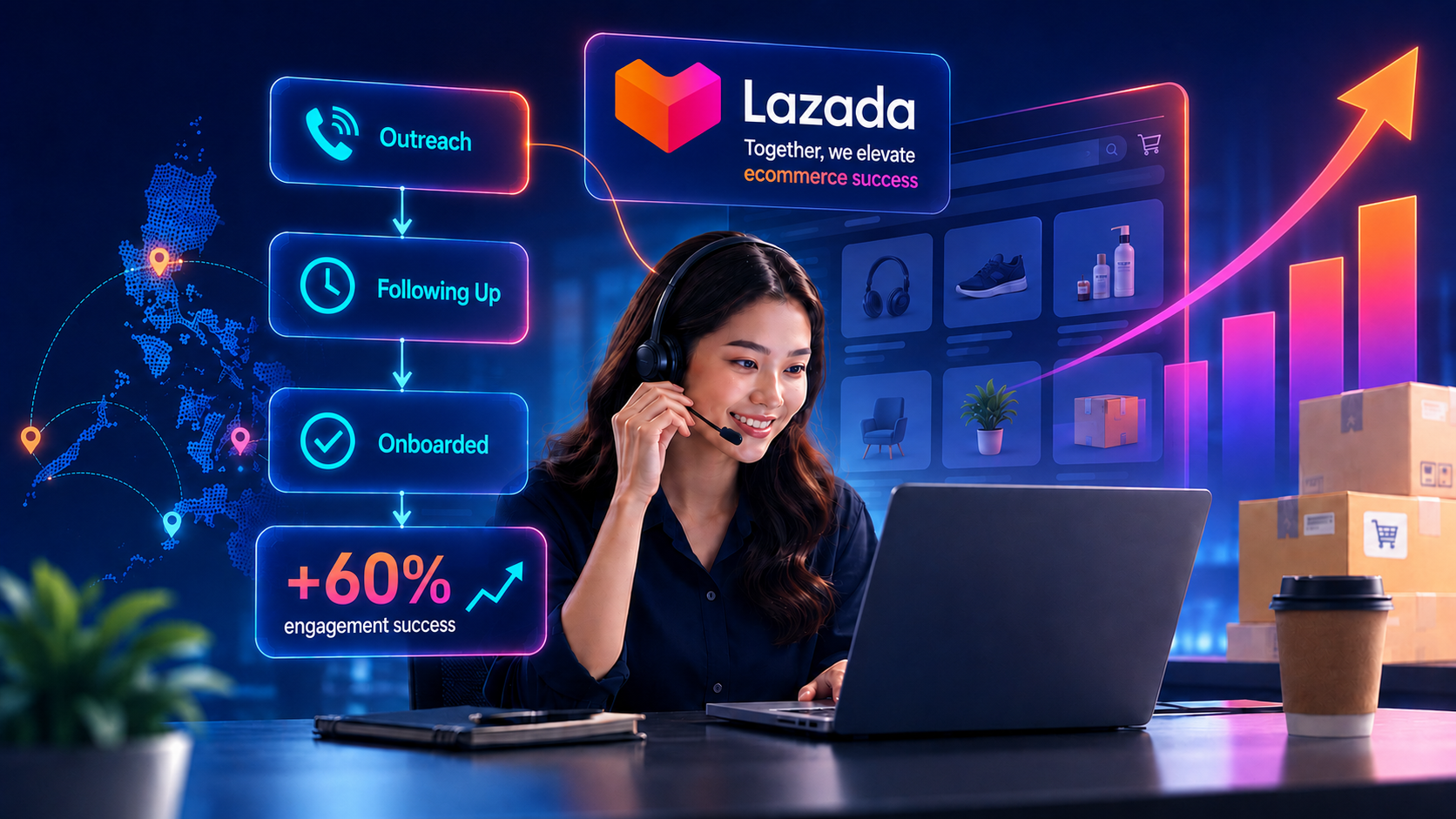
That is the context behind SyncTalents’ ongoing work with Lazada Philippines. SyncTalents supports a seller outreach and engagement requirement designed around the marketplace’s broader seller-growth objectives. Across thousands of sellers engaged through the program, the team has achieved more than a 60% success rate against defined engagement targets.
The engagement provides a practical case study in how sales outsourcing in the Philippines can move beyond supplying headcount. The operating requirement calls for the right talent, consistent workforce support, visibility, continuity, and the ability to adapt as marketplace priorities evolve.
The Challenge: Turning Seller Potential Into Productive Engagement
For a large marketplace, the problem is rarely a shortage of potential merchants. The harder task is converting a broad seller universe into productive conversations and, eventually, stronger participation on the platform.
Prospective sellers are not uniform. Some already understand e-commerce and need only the right commercial opportunity. Others require a clearer explanation of the platform, repeated follow-ups, objection handling, or additional guidance before they can make a decision.
That changes the talent requirement. Seller-engagement professionals need persistence, confidence, commercial awareness, communication ability, professionalism, and comfort working toward measurable targets. They must be able to speak with business owners, communicate value clearly, maintain accurate information, and keep conversations moving.
The workforce surrounding those professionals matters just as much. Vacancies, attendance issues, inconsistent supervision, delayed replacements, or administrative bottlenecks can quickly affect execution. A seller-growth program therefore needs more than recruitment: it needs an operating layer around the people doing the work.
The SyncTalents Approach: Recruit for the Work, Not Just the Title
SyncTalents approaches the Lazada requirement as a managed workforce function rather than a collection of individual hires. Recruitment is the starting point, but the objective is to build execution capacity around the client’s business requirement.
This means looking beyond job titles when identifying candidates. A general customer-service profile, for example, is not automatically equivalent to a seller-engagement professional. The work is closer to business development and commercial engagement: resources need to be comfortable initiating conversations, explaining opportunities, managing objections, following through, and operating within a target-driven environment.
Once resources are deployed, SyncTalents supports the workforce-management side of the operation. This includes the people infrastructure required to sustain delivery: workforce administration, continuity, coordination, escalation handling, replacement support, and operational visibility.
Lazada continues to own its marketplace strategy, seller programs, processes, standards, and commercial direction. SyncTalents supports the workforce components needed to help the deployed team execute consistently. This distinction is central to the managed model: the outsourcing partner extends operating capacity without replacing the client’s ownership of strategy.
Managed Sales Outsourcing vs. Traditional Staffing
Traditional staffing often starts with a headcount question: How many people do you need? A managed sales outsourcing model starts with a different question: What does the team need to accomplish?
That shift changes the design of the engagement. Instead of optimizing only for positions filled, the workforce model considers the commercial objective, the type of talent required, continuity of execution, management burden, and how the team must respond when requirements change.
For a marketplace seller-engagement program, this is particularly relevant because performance is not created by hiring alone. Sellers may require multiple interactions over time. Campaigns and categories may change. Merchant profiles may require different engagement approaches. The workforce must continue performing while the commercial environment changes around it.
The Result: Thousands of Sellers Engaged and Measurable Performance
The clearest evidence from the ongoing Lazada engagement is its operating scale and measurable performance. Across thousands of sellers engaged through the program, the team has achieved more than a 60% success rate against defined engagement targets.
Across thousands of sellers engaged through the program, the team has achieved more than a 60% success rate against defined engagement targets.
The importance of that result is not simply the number of businesses reached. Seller acquisition depends on consistency. Prospective merchants may need time to understand the opportunity, evaluate how e-commerce fits their business, and determine whether participation is the right next step. A dependable engagement team helps sustain those conversations while maintaining a professional experience for the merchants being approached.
The engagement also demonstrates the value of aligning workforce support with the client’s commercial objectives. By combining appropriate talent with workforce administration, continuity, and an operating structure designed around the requirement, the model helps maintain productive seller engagement without requiring the client to recreate every supporting people-management process internally.
Why Adaptability Matters in E-Commerce
E-commerce is not static. Seller priorities change, campaigns evolve, new categories emerge, and market conditions shift. A workforce supporting marketplace expansion must be capable of adapting as well.
SyncTalents’ ongoing work with Lazada reinforces the importance of responsiveness. Rather than treating the engagement as a fixed set of positions, the requirement can be evaluated as the business develops. Sourcing, deployment, workforce support, or team composition can be adjusted while preserving continuity.
This is one of the practical advantages of a managed arrangement. The goal is not to introduce unnecessary complexity. Good outsourcing should make execution easier: the client remains focused on strategy and commercial direction while the workforce partner helps sustain the people infrastructure required for delivery.
What Other Companies Can Learn From the Lazada Engagement
The Lazada case is specific to marketplace seller engagement, but the underlying operating model can apply to other commercial functions that depend on structured outreach and sustained execution.
Organizations building outbound sales teams, B2B lead-generation functions, merchant or partner acquisition programs, field activation groups, or account-engagement teams face many of the same questions: What talent profile does the work actually require? How will continuity be maintained? Who handles workforce administration and replacement needs? How will the team adapt as commercial priorities change?
For companies evaluating sales outsourcing in the Philippines, the key distinction is therefore between buying headcount and building capability. If the business problem requires a repeatable operating team rather than isolated hires, a managed workforce model can provide an alternative to recreating the entire people-management layer internally.
Building Commercial Capability With SyncTalents
The ongoing Lazada Philippines partnership reflects what SyncTalents aims to bring to managed workforce engagements: reliable execution, adaptable talent, and workforce support aligned with the client’s business goals.
We recruit for the work, not simply the title. We provide structure around the people deployed. We coordinate closely with the client while respecting its ownership of strategy and business direction. And as requirements evolve, we work to ensure that the workforce supporting them can evolve as well.
For organizations considering their next stage of growth, the question is not simply whether they need more employees. It is whether they need more capability.
Frequently Asked Questions
What is seller engagement outsourcing?
Seller engagement outsourcing is a managed workforce model in which an external partner recruits, deploys, and supports professionals responsible for acquiring or engaging merchants on behalf of a marketplace or commercial organization.
How is managed sales outsourcing different from staffing?
Staffing primarily focuses on supplying people for defined positions. Managed sales outsourcing begins with the business objective and adds workforce support around execution, continuity, administration, and changing requirements.
Can the model support functions outside e-commerce?
Yes. The same workforce principles can support outbound sales, B2B lead generation, merchant or partner acquisition, field activation, account engagement, and other specialized commercial teams, depending on the client’s process and objectives.
Turn a Growth Requirement Into an Operating Team
Whether your organization needs an outbound sales team, B2B lead-generation function, seller or merchant acquisition program, partner engagement team, or another specialized commercial workforce, SyncTalents can help translate the requirement into an operating team.
You define the opportunity. SyncTalents helps build the people and workforce support needed to pursue it.
Visit synctalents.com or email synctalentsinternational@gmail.com to start a conversation about a managed workforce designed around your business objectives.